About Us
Learn about our history, our roots, and the team guiding the Manghim.
Learn about our history, our roots, and the team guiding the Manghim.
Under the shade and blessings of Mt. Kanchenjunga, Mt. Sinioulchu, and Mt. Kabru, and alongside the lifeline of Sikkim, the Teesta River, lays the beautiful village of Mangshila. It is located in the northern part of Sikkim in Mangan District.
Mangshila village is about 50 km away from Gangtok and approximately 17 km from the district administrative centre, Mangan. Between Gangtok and Mangshila,there are many historic and beautiful places along the National Highway, such as Seven Sister Falls, Tumlong Palace—third capital of Sikkim—Phodong Monastery, Mindrolling gumpa and other important monasteries and cultural sites, including Labrang Monastery.
Mangshila village is situated at a high altitude, ranging between 3,300ft and 4,000 ft above sea level (approximately 1,000 m–1,280 m).
Originally, it is believed that, more than 8th century ago, there was a small and beautiful village called Gairi-Gaon/Yeba Pangbay in upper Mangshila, where an almost 100–150 ft high straight vertical stone was found and which is known as Chotlung/stone holy Fukku. The holy stone and holy Fukku surrounding areas were covered by paddy-farming fields. Limbu people/communities lived there permanently for many years ago.
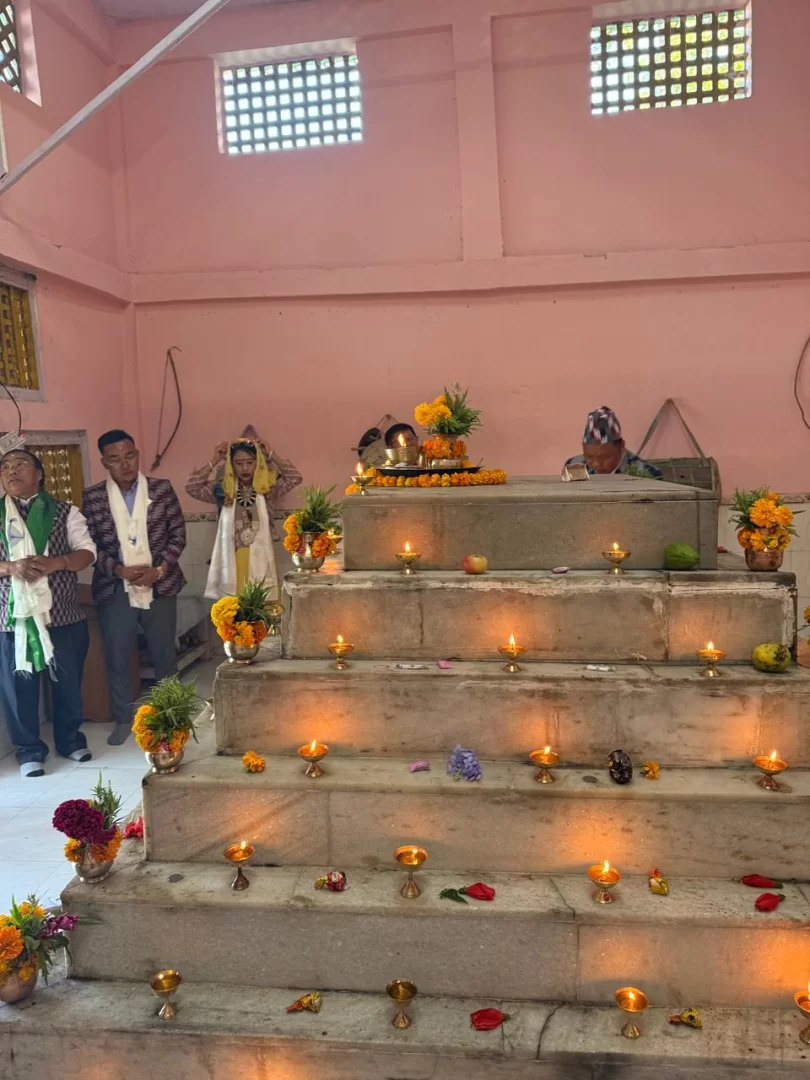
Daily prayer, seasonal rites and rituals rooted in Yuma Sammang tradition.
Teaching and safeguarding the Sirijunga script for future generations.
A gathering place for youth, elders and families across Sikkim.
Language classes, seminars and scholarship for the next generation.
MINGSHARA-LUNG
Initially, the people of this particular area saw two unknown persons at the stone area during the New Moon (Ausi) and Full Moon (Purnima). Slowly and gradually, people observed them and came to know and believe that they were related to God and goddesses also known as MANGSHIELLA (MANG-YUKTEN). Mangshila word is initially and originally derived from Mundhumi words MANGSHI-E-LLA
Curiously, the head of the community, namely Tumya-Hang,Phedangmas, Yebas and Sambas, introduced them as gods and goddesses.
When they spoke, all the Limboo communities were surprised. They bowed down the knee before them and accepted their presence, and came to know the name "MANGS," which mean "Gods."
The literary meaning of Holy Mangshila is known as the "sitting place of God." Slowly and gradually, the Limboo people came to know that these were actual gods and began worshipping and believing them.
Mangs preaching the spiritual MUNDHUM knowledge of life, such as "Thaklung Sam",YEHANG MUNDHUM, Ideas of muksam, Traditions, Customs, Rituals, and Religious practices of Phedangbas, and finally people permanently accepted them as real "MANGS."
Ever since then, Mangshila has been considered a holy place, and the villagers have been happy to live in this area, which was named "MANGSHILA."
Now, Mangshila village is designated as Mangshila–Tibuk GPU under the 30th Dzongu Constituency, and it includes six villages:
Tingzey Ward, Tibuk Ward. UpperJhusing, LowerJhusing, Upper Ralak, Lower Ralak.
The majority of the population of Mangshila GPU is Limboo. The community follows and believes in Yumaism. Other communities, including Bhutias, Lepchas, Tamangs, and others, are also living here and have made this place their home for a better life and future.
Many important governmental institutions such as Mangshila Senior Secondary School, Sikkim Government Collage Mangshila, Ralak Junior High School, Tibuk Junior High School, Jhusing Primary School, Tingzay Primary School, ICDS centres.
According to the 2011 Census, more than 10,000 people (Ten Thousand) are permanently living in Mangshila for their livelihood
Many important places and mundhumi monuments are in Mangshila. Some of them are Mangshila Mukumlung, Mangshila Sirijunga Yuma Manghim and Sammit Kokma (Hawa Dara).
SAMMIT KOKMA(HAWA-DARA)
Additionally, the king of chogyal Thutob Namgyal also permitted and handed over the "Laal Mohor" to the Limboo community of Mangshila to remain here for forever during his reign from 1793 to 1861.
Two of the most historic places are first-ever Sirijunga Yuma Manghim and the second Mukum Lung, which is a worshipping place in Mangshila. Additionally, the King of Tsupud Nyagyal also permitted and handed over the "Laal Mohor" to the Limboo community of Manghsila to during his reign from 1793 to 1861.
Mangshila Sirijunga Manghim Managing Committee 2026
No team members listed yet.
Daily, 5:30 AM - 7:00 PM. Prayer sessions held morning and evening.
Modest attire is requested; shoulders and knees covered inside prayer halls.
Permitted in courtyards; kindly ask before photographing rituals or elders.
On-site parking available; accessible pathways throughout the complex.